The psalms are beautiful and were the original worship songs for the Israelites. Many of them were written by David throughout his life. Today, we’ll will focus on the first verse of the first psalm.
Blessed is the man
Who walks not in the counsel of the ungodly,
Nor stands in the path of sinners,
Nor sits in the seat of the scornful; Psalm 1:1 NKJV
We’ll take a look at the above scripture verse and break it down. But to sum it up, it’s what a righteous man does not do. I find this scripture verse to be comforting. My prayer is that as we break it down, it will be a blessing and comfort to you as well.
Blessed is the man
 The word blessed is from the Hebrew word esher and conveys the idea of happiness or contentment. Esher comes from the root word is ashar which means “to be straight” or “to be right”. It refers to a man or woman who is “right” or “straight” with God. Basically, a happy man or woman.
In Hebrew, the word is plural, meaning the person has multiple blessings or intensified blessings.
It is not just for those who have incredible accolades (like kings, or scholars or the wealthy). But also for the common man. Charles Spurgeon commented: “This blessedness is as attainable by the poor, the forgotten, and the obscure, as by those whose names figure in history, and have immense fame.”
Who walks not in the counsel of the ungodly,
 The blessed man does not do certain things. He won’t walk or stand on a certain path, nor will he sit in a place where he shouldn’t be. The blessed man thinks and behaves differently than an ungodly man. They fall into different groups of people.
It also gives a clear insight to the progression of sin. It is insidious. One act leads to another. So, the man who acts on bad counsel, may begin to do evil deeds and it progresses until his life is in a total shambles.
When the ungodly have counsel, the righteous man will not take it. Today, we are bombarded with advice from every place you can think of from YouTube, Twitter (now X), Instagram… you name it. The righteous man knows how to discern the counsel of the ungodly.
It’s sad to know how many fail here. Many don’t even consider if the counsel is godly or ungodly. They hear the advice and don’t consider if it’s godly or not. They simply jump on the bandwagon.
Sadly, man’s own conscience, his own mind, his own heart, can give him ungodly counsel. The key here is to be and stay in the Word of God. God’s word is always the best counselor, with the Holy Spirit as your teacher. Godly counselors will always bring the truth of God’s word to help someone who wants counseling. Check out Psalm 119:24.
Nor stands in the path of sinners,
A righteous man knows that the sinner’s path is wrong for him. Path speaks of a way, a road, or a direction. The righteous man will not travel in the same direction as a sinner.
Nor is a righteous man afraid to take a less-traveled road because he knows it will lead to happiness, blessings, and eternal life.
Enter by the narrow gate; for wide is the gate and broad is the way that leads to destruction, and there are many who go in by it. Mattew 7:13
And a righteous man is confident in his path. And God has a path for each man that will lead to enormous blessings. (And it’s not always monetary.)
You will show me the path of life; in Your presence is fullness of joy; at Your right hand are pleasures forevermore. Psalm 16:11
Nor sits in the seat of the scornful
What is a scornful person? They love to sit and criticize the people and things of God. You see it all over the internet but the righteous man won’t stand for it.
When others put down Christians, it’s easy to sit among them and join the fray of criticism. Christians have a lot of things that people can take stabs at. But it is wrong for Christians to do that because then they become the scornful.
 Instead, Christians should always stand up and show others he or she is a follower of Christ.
In conclusion, a blessed person listens to advice from godly counselors but should always line up that advice with what the Bible says. (In most cases, they will refer the righteous person to scripture passages that back up the advice. And not just one, but many.) The righteous person will stand tall and make a claim of being a child of God and a Christian.
What are you thoughts of about this passage? Give comments below.
 Jesus went off to pray… alone. He was focused on praying. (John 6:15, Matthew 14:23, Mark 6:46)
 The reality is… when we obey the Lord, the storms WILL come. Some will be challenging and others not so challenging.
 SING in the midst of the storm! (Years ago… when I first became a Christian, Marinatha music was a staple. One of the songs – – almost all of them are based on scripture. One of them was based on Psalm 18. Check it out.
 The Apostles willingly received Jesus into the boat.

 This week marks the holiest week of the Christian calendar. Passion week begins with Palm Sunday and ends with Resurrection Sunday.
 And then in 2004, Mel Gibson produced The Passion of the Christ. I remember what a controversy it was. How Hollywood disdained and mocked Mel Gibson and the film. But God will not be mocked, and the film was an incredible success grossing over 612 million worldwide. It became the seventh-highest domestic grossing film and the highest-grossing Christian film of all time.
 We hadn’t expected it would be as brutal as it had been and yet, thinking about the abject cruelty of the Roman Empire, the film was probably not nearly as violent as the reality of the actual crucifixion. When the film ended, there was not only pin-dropping silence in the darkened room, but a stillness, a reverence, that I had never seen in a theater before, or since. As those around us got up and soundlessly left the theater, we had the same sorrow etched on our faces that the previous group had had. When I asked my friends and family members, some in our state and many who lived across the country, of what had occurred when they went to see the film, they recounted the same experience. The unnerving silence, the sorrow, and the stillness.
 Jesus came to earth as a humble man, died a sinner’s death even though He was without sin and arose from the dead. That is the gospel. And that is what we, as Christians, believe.
 Let’s look at the background for this book of the Bible. Small children know the story of Jonah and the whale, and that’s what this book is about, that childhood Bible story. However, there’s more to the story than our childhood memories.
 We pick up the story at this verse. God stirred up a storm while Jonah was on that boat to Tarshish in direct opposition to what God told him to do. There was nothing wrong with the ship or the sailors on that ship, but Jonah was not supposed to be there. And it probably would not have been an issue if Jonah had traveled to Tarshish any other time, but he was not supposed to be on that boat.
 Let’s look at how this verse impacts our lives today. Whether we are talking about God’s calling on our lives or we are talking about things we are supposed to do in our lives not related to God, it all boils down to disobedience. When we are disobedient to God when he calls us to do something, many things can happen to us. Perhaps not as dramatic as Jonah’s situation, but there is a consequence to not heeding God’s call on our lives. Likewise, if we disobey authority figures in our lives, it has consequences. Those consequences can be anything from going to jail for rioting to losing our job for insubordination. Consequences are consequences, and they can take any form.
 Loving his neighbors was not what Jonah wanted to do. He wasn’t called to like the Ninevites, he was called to love them by showing them their sin. And he paid for his disobedience. We all should strive to love our neighbors. From the grumpy guy down the street to the harried mother of five kids to the down-and-out street person that no one wants to see. We may not like any of them, but we are called to love them. God does and so should we.
 Let’s look at the verse. Obadiah is preaching against the Edomites because they are filled with pride and it has deceived them. They boasted about their natural fortifications in the clefts of the rocks high in the mountains. They thought because their physical habitat was difficult to reach, they were invincible. A sure sign of pride.
 Pride can be an insidious thing. It can manifest itself in anything in a person’s life. You name it, it can be a source of pride. The question is, what is the level of that pride. If the level of pride is so great that it affects our daily life and causes issues, then it’s time to take stock. So, what do we do about it?
 Being aware of how much pride we have is the first step. If you recognize an area in your life where pride has not only taken root but has caused issues, then you are better able to combat it. If you cannot recognize the areas where pride has manifested itself or if that pride is sinful, asking God to show you where those areas are, is the best thing to do. Listening to God speak to you about it, will help you understand what needs to be done. Then ask God to help you exercise better control over it.
 At one time my husband was very prideful in his job. That job and a few subsequent ones were taken away from him. He suffered some years until God showed him it was his pride that caused many of the job losses. It was a challenging lesson for him…and for me. But with God’s help, he recognized it and overcame it.

 and the man, Amos, is one of the minor prophets of the Bible. His name means “burden” or “burden bearer” and he was a man of burden as he delivered prophecies of judgment on the nations surrounding Israel and Israel itself. He lived about ten miles from Jerusalem and Bible scholars have dated his ministry between 750 and 760 BC, at the time of King Uzziah, when the nation of Israel had been divided into two nations for 150 years

 So how does this verse correlate to today’s society?
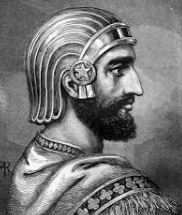 Cyrus was an ancient, cruel and pagan king. It’s interesting to me that this mighty king would proclaim the Jewish God, THE God and then give the Jews the green light to return to Jerusalem and build the temple to their God. This king ultimately allowed the exiled people to return to their homeland.
 Solomon asked God not for wealth, health or abundance of any sort but he asked for wisdom. How wise it was of him to ask God for a trait that he could use to push the nation of Israel to heights no one had ever seen before. God was exceedingly pleased with the request and not only gave Solomon great wisdom, the likes of which this earth hadn’t seen before him or since but great wealth and favor among the nations.
 One day last year my husband called me on the phone from work and said he was having a tough time dealing with a case he had (he’s a network engineer and many times those cases have a complexity that sometimes can be way over not on his head but also his colleagues.) We had prayed that morning, but this was a special prayer for the specifics of the case. We took about five minutes to ask the Lord to intervene and give my husband the “eyes” to see the problem to fix it or have His ministering angels intervene and fix it for him. The wind up was when he got off the phone and went back to work on it, he figured it out, fixed it and the client was happy. We have scores of stories like that. Where God answered the prayer for wisdom. God gives us our needs, not our greeds. We were specific in the wisdom he needed for the moment and God answered that prayer.
 In my younger days, my pastor would sing this blessing at the end of each service. It comforted me. I did not know it was an actual blessing from the Bible. In fact, it is the Aaronic Blessing and one which I have heard both in English and in Hebrew.